16 – 17 June 2027
Bali, Indonesia

About This Bootcamp

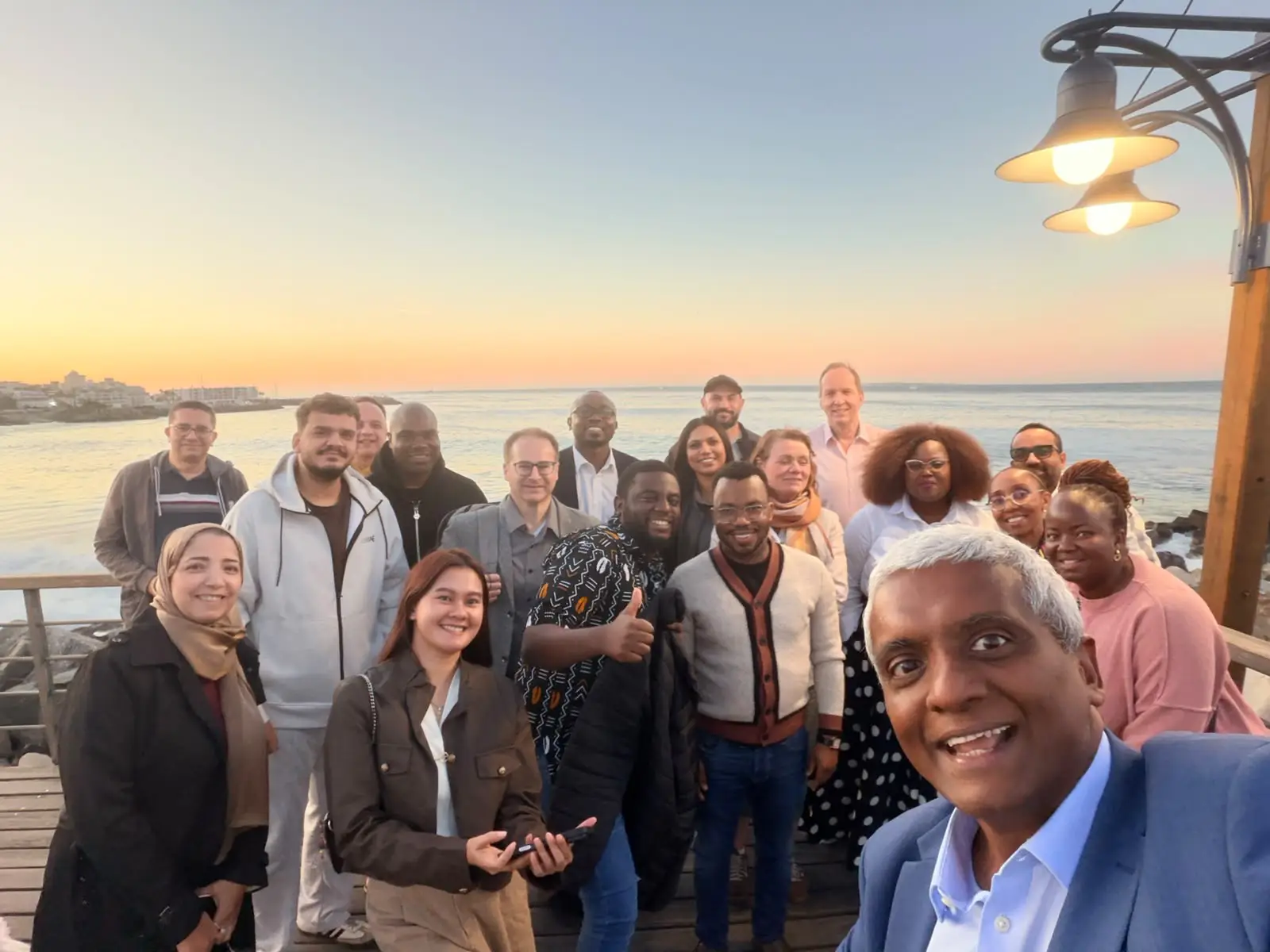
Building the AI Bank Bootcamp is not a conference. It is an intensive executive learning experience in which senior bankers move from understanding AI to deciding how their institutions will use it, govern it and pay for it. Previous editions in Kigali and Cape Town showed that the most valuable learning happens at the keyboard and at the board table: delegates who built an agent, watched it fail and fixed it were the ones who left with a clear view of what to ask their own teams.

Building the AI Bank Bootcamp is not a conference. It is an intensive executive learning experience in which senior bankers move from understanding AI to deciding how their institutions will use it, govern it and pay for it. Previous editions in Kigali and Cape Town showed that the most valuable learning happens at the keyboard and at the board table: delegates who built an agent, watched it fail and fixed it left with a clear view of what to ask their own teams.

The Bali edition opens the programme to a wider world. It brings together banking leaders from Indonesia and Vietnam with peers from Africa, the Middle East, Europe and other markets beyond Asia, and retains the full bootcamp experience:
  • A global room. Every table mixes markets and regulators, so each agent is tested, and each governance answer challenged, by someone operating under different rules, customers and competitive pressures.

  • Problems every market shares. Build cases reflect challenges common to fast-growing and established markets alike: scams and mule accounts on real-time payment rails, MSME credit with alternative data, deepfake-resistant KYC, AI-executed payments within regulatory limits, Islamic finance screening and trade document checks.

  • Comparative regulation. Delegates see how the same AI decision would be treated in Indonesia, Vietnam, the European Union, South Africa and other jurisdictions in the room, and what that means for banks that operate across borders.

  • More time where it matters. Day Two gives the capstone a full 90 minutes and concentrates the board work into three decisive simulations.

Throughout, the programme draws on Building the AI Bank: Speed, Judgment and Power by Emmanuel Daniel, on faculty experience from previous editions, and on current regulatory and industry developments worldwide.

The Bali edition retains the full bootcamp experience and updates it in three ways:

01
A cross-market room.

Indonesian bankers work alongside peers from Africa, the Middle East, Europe and other markets beyond Asia. Each table mixes jurisdictions, so every agent is tested, and every governance answer challenged, by someone operating under a different regulator.

02
New labs and cases.

Build cases now reflect live problems in Indonesia and comparable markets: scams and mule accounts on real-time rails, MSME credit with alternative data, deepfake-resistant KYC, Islamic finance screening and trade document checks.

03
More time where it matters.

Building on feedback from previous cohorts, Day Two gives the capstone a full 90 minutes and concentrates the board work into three decisive simulations.

Why Bali: A Regional Executive Learning Destination

  • Focus.

    A residential, retreat-style setting keeps senior executives in the room for two full days, which an intensive build programme requires

  • Access.

    Bali’s international airport connects directly with the major hubs serving Asia, the Middle East, Africa and Australia, making it practical for delegates from beyond the region

  • A live case study.

    Indonesia combines one of the world’s largest digital economies, a national QR and real-time payment infrastructure, fast-growing ecosystem digital banks, a significant Islamic finance sector and a large MSME and underbanked population: the conditions many international delegates face at home

  • Neutral ground.

    A setting away from delegates’ head offices encourages candid discussion between competitors and across jurisdictions

Why Bali: Where Asia Meets the Wider Banking World

Bali positions the Building the AI Bank Bootcamp as an international executive learning destination rather than a city-centre conference:

  • A meeting point.

    Bali’s international airport connects directly with the major hubs serving Asia, the Middle East, Africa, Europe and Australia, making it practical for delegates travelling from well beyond the region

  • Focus.

    A residential, retreat-style setting keeps senior executives in the room for two full days, which an intensive build programme requires

  • Living case studies.

    Indonesia and Vietnam are two of the world’s most dynamic banking markets, with national QR and real-time payment rails, ambitious digital banks, large MSME and underbanked populations and fast-moving AI regulation: conditions many delegates from Africa, the Middle East and Latin America will recognise from home

  • Neutral ground.

    A setting away from head offices encourages candid discussion between competitors and across jurisdictions

The Landscape Has Changed: What Bankers Must Know Now

Indonesia: governance guidance in place, national rules pending

Indonesia: governance guidance in place, national rules pending

OJK has issued its Artificial Intelligence Governance for Indonesian Banking, setting expectations on accountability, human oversight, fairness, reliability and IT risk. National Presidential Regulations on an AI roadmap and AI ethics have been awaiting signature through 2026, and the Personal Data Protection Law THE BANKING ACADEMY | Building the AI Bank Bootcamp Bali | Bali, 16–17 June 2027 © The Banking Academy 2025–2027 | www.thebankingacademy.com | Page 2 shapes how customer data may be used to train and run AI. Banks must build governance now, ahead of the final rules.

Scams have become an industrial-scale AI problem

Scams have become an industrial-scale AI problem

By October 2026, the Indonesia Anti-Scam Centre had received more than 737,000 scam reports since its launch. Voice cloning, deepfakes and mule accounts on real-time rails are attacking exactly the controls banks rely on. The same pattern is visible in Africa, the Middle East and Europe.

Foundation models are the new data moat

Foundation models are the new data moat

Revolut’s PRAGMA and Nubank’s nuFormer show banks training models on their own transaction events. Cape Town faculty concluded that most banks should earn this investment one valuable decision at a time. Ecosystem banks with platform data may get there first.

The customer’s agent is at the door

The customer’s agent is at the door

Banks are taking three positions on third-party AI agents acting inside customer accounts: block, limit or welcome. Vietnam’s Circular 53/2026 has set daily caps on AI-executed payments; some large US banks have refused agents outright; card networks and open protocols are building agent payment rails. Every bank needs a board-approved position and a view on who carries the loss.

Regulation is converging on the same questions

Regulation is converging on the same questions

In the EU, AI Act obligations for high-risk systems such as credit scoring are set to apply from 2 December 2027 under the provisional Digital Omnibus agreement. South Africa already restricts decisions based solely on automated profiling. The Financial Stability Board has set expectations on AI third-party risk. Whatever the regime, supervisors are asking the same things: documentation, explainability, fairness testing, human oversight and supplier control.

A few suppliers sit behind every AI bank

A few suppliers sit behind every AI bank

A model provider’s update can change how a bank’s agent behaves without a line of the bank’s own code changing. Boards need tested exit plans, audit access and a view of concentration risk.

The Landscape Has Changed: What Bankers Must Know Now

The Global Forces

Foundation models are the new data moat

Foundation models are the new data moat

Revolut’s PRAGMA and Nubank’s nuFormer show banks training models on their own transaction events, in a developed and an emerging market respectively. Cape Town faculty concluded that most banks should earn this investment one valuable decision at a time. Banks with ecosystem or platform data may get there first.

The customer's agent is at the door

The customer’s agent is at the door

Banks worldwide are taking three positions on third-party AI agents acting inside customer accounts: block, limit or welcome. Some large US banks have refused agents outright; Vietnam has set daily caps on AI-executed payments; card networks and open protocols are building agent payment rails. Every bank needs a board-approved position and a view on who carries the loss.

Fraud has become an industrial-scale AI problem

Fraud has become an industrial-scale AI problem

Voice cloning, deepfakes and mule accounts on real-time rails are attacking exactly the controls banks rely on, from biometric onboarding to verbal payment authorisation. The pattern is the same in Asia, Africa, the Middle East and Europe.

A few suppliers sit behind every AI bank

A few suppliers sit behind every AI bank

A model provider’s update can change how a bank’s agent behaves without a line of the bank’s own code changing. The Financial Stability Board has set expectations on AI third-party risk. Boards need tested exit plans, audit access and a view of concentration risk.

Regulation is converging on the same questions

Regulation is converging on the same questions

Whatever the regime, supervisors are asking the same things: documentation, explainability, fairness testing, human oversight and supplier control. What differs is how prescriptive each market has become, and how quickly.

Market Snapshots

Indonesia banking AI governance

Indonesia: governance guidance in place, national rules pending

OJK has issued its Artificial Intelligence Governance for Indonesian Banking, setting expectations on accountability, human oversight, fairness, reliability and IT risk. National Presidential Regulations on an AI roadmap and AI ethics have been awaiting signature through 2026, and the Personal Data Protection Law shapes how customer data may be used. By October 2026, the Indonesia Anti-Scam Centre had received more than 737,000 scam reports since its launch.

Vietnam AI regulation

Vietnam: hard numbers on what an AI may do

Vietnam’s Law on Artificial Intelligence took effect on 1 March 2026. On 30 September 2026, the State Bank of Vietnam issued Circular 53/2026/TT-NHNN, which classes automated credit decisions of VND 50 million or more as high-risk, caps AI-executed payments at VND 100 million a day for individuals and VND 500 million for institutions, and gives customers the right to suspend or revoke AI payment authority. Few regulators anywhere have been so specific.

European Union AI regulation

Europe: the high-risk deadline approaches

Under the EU AI Act, credit scoring is a high-risk use. Obligations for such systems are set to apply from 2 December 2027 under the provisional Digital Omnibus agreement, and they will reach any bank serving EU customers.

Africa and Middle East AI regulatory landscape

Africa and the Middle East: principles first, specific rules to follow

South Africa already restricts decisions based solely on automated profiling, and its regulators are developing a principles-based approach aligned with the Financial Stability Board. Across much of Africa and the Middle East, supervisors are applying existing data protection, model-risk and outsourcing rules to AI while specific frameworks are developed.

Session Formats

Executive Briefing

A structured intelligence briefing, never longer than 15 minutes before the room is asked to respond

Hands-On Lab

Tables work directly on a hosted AI agent platform and an AI deck tool. Laptops required; nothing to install

Structured Dialogue

Exercises applied to each delegate’s own institution, with answers distilled for the room

Architecture Workshop

Small groups apply the foundation-model and three-phase core banking models to their own bank

Board Simulation

Delegates take board seats with confidential briefs and must reach a recorded decision; faculty intervene in role

Board Decision Card

Completed at the end of every session: Decide, Defer or Reject, with rationale and owner. The cards become the delegate’s board pack

The Programme

  • 18:00 – 20:00

    Welcome Cocktail — The Chair’s Question

    NETWORKING

    • Delegates meet their mixed-market table and the faculty
    • Each delegate writes the one question their Chair is most likely to ask them about AI. Questions are pinned to the Board Wall; by Thursday afternoon, every delegate must be able to answer their own
  • Foundations and the First Build

  • 08:00 – 08:30

    Registration and device check for the hands-on sessions

  • 08:30 – 09:15

    Opening Session — The State of AI in Banking: A Global View

    BIG PICTURE

    A rapid briefing on what is deployed, not what is promised, starting from the room’s own answers.

    • The AI Maturity and Board Readiness Index: results from the pre-bootcamp questionnaire, compared across Indonesia, Vietnam and the other markets in the room
    • From digital bank to AI bank: why digital banking accelerated human rules, while AI delegates judgement itself (Building the AI Bank, Chapters 1 and 2)
    • Advantage sits in context, grounding and control, not the model
    • The forces reshaping banking in 2027: foundation models, customers’ AI agents, programmable money, AI-enabled fraud and supplier concentration
    • Incumbents versus digital and ecosystem banks: who is winning with AI, in Asia, Africa, the Middle East and Europe

    Board Decision Card: the one AI decision your board has been postponing

    Facilitated by Emmanuel Daniel

  • 09:15 – 10:45

    Hands-On Lab 1 — From Blank Screen to a Running Agent

    HANDS-ON LAB

    By 10:45, every table has a working AI agent doing a real piece of banking work. It will be rough and it will get things wrong; its failures are the material for the rest of the day.

    • What an agent is, in the terms you will configure: model, tools, skills, memory, knowledge and sub-agents
    • The sorting exercise: ten real tasks. Which are chatbot work, which are ordinary software, and which need an agent?
    • Worked example: an AML alert investigation agent built live, step by step
    • Choose your case: scam and mule-account investigation on real-time rails; MSME credit early warning using alternative data; KYC review with deepfake and document-fraud checks; an AI payments agent operating within regulatory daily limits; Shariah-compliance screening for Islamic financing; trade finance document checking
    • Build version 0.1: identity, objectives and constraints; the tools and data it can reach. Technical delegates drive; business delegates interrogate

    Output: agent v0.1 running one task end to end, and the table’s Agent Opportunity Scorecard started

    Facilitated by Tavonga Muchuchuti

  • 10:45 – 11:00

    Coffee break

  • 11:00 – 11:45

    Session 2 — Agentic AI:
    The Hard Problems Boards Are Not Asking Yet

    BRIEFING

    The governance, liability and architecture questions practitioners are wrestling with now.

    • Identity: when an agent presents a claim on a customer’s behalf, who is acting, on whose authority? The case for a credential per agent instance
    • Liability: who pays when an agent gets it wrong? Comparing customer-liability, capped-permission and open-protocol models
    • Agent payment rails and agentic commerce: what a bank must expose, and to whom, to be reachable by an agent
    • The interface is leaving the bank: what this means for distribution, pricing and the customer relationship (Building the AI Bank, Chapter 8)
    • AI has flipped build-versus-buy: why falling build costs change the transformation equation
    • Exercise: each table maps the three processes in its markets most exposed to agent disruption in the next 12 months

    Board Decision Card: who carries the loss when an agent acting for your customer makes a mistake

    Facilitated by Axel Winter

  • 11:45 – 12:30

    Session 3 — Agents and Humans:
    The New Hybrid Workforce

    DIALOGUE

    Jobs are bundles of tasks. Agents should take the separable, verifiable ones; people keep the work entangled with judgement, trust and accountability.

    • Delegate the task, not the accountability
    • De-skilling for experts and “never-skilling” for juniors: who becomes your senior credit officer in 2035?
    • Quality control at scale: reviewing hundreds of AI outputs a day without fatigue
    • Guardrails on permissions, spending, data access and customer contact
    • Exercise: staff your agent as a new hire: allocate twelve tasks between agent, agent with human check and human; name its supervisor, permissions, limits and escalation triggers

    Facilitated by Prof. Dr. Juergen Rahmel

  • 12:30 – 13:30

    Lunch — cross-market peer tables: “What my regulator asked about AI this year”

  • 13:30 – 14:15

    Session 4 — Foundation Models in Banking:
    Earning the Data Moat

    WORKSHOP

    • Revolut’s PRAGMA and Nubank’s nuFormer: what they reported, and the benchmark hygiene boards should apply to such claims
    • A data lake is not a usable customer history: what must be in place first
    • Own, rent or pool: build your own model, rent a frontier model, or pool anonymised data at market level with regulators, academia and partners
    • Ecosystem banks and platform data: the routes emerging in Indonesia and Vietnam, and their parallels in Africa, the Middle East and Latin America
    • Exercise: score your institution’s data readiness out of 20, then debate the motion “Our bank should build its own transaction foundation model within 24 months”, with a vote before and after

    Board Decision Card: own, rent or pool, and the budget line it needs

    Facilitated by Axel Winter and Prof. Dr. Juergen Rahmel

  • 14:15 – 15:00

    Session 5 — Who Decides, Who Supervises,
    Who Can Stop It: The Decisioning Architecture

    DESIGN

    Digital banks speed up decisions; AI banks redesign who makes them.

    • The functional AI stack: Data, Inference, Control and Execution (Building the AI Bank, Chapter 6)
    • Five patterns for placing the human, and four tiers of stop-power
    • The sign-off test: above 95% approval, the checkpoint is theatre
    • One decision, four regimes: how OJK’s guidance, Vietnam’s Circular 53, the EU AI Act and South Africa’s automated-decision rule would each treat the same AI credit decision
    • Exercise: list every decision your table’s agent makes; rate each for reversibility, stakes, frequency and whether it can be checked afterwards; then assign who decides, supervises and can stop it

    Board Decision Card: the first material decision in your bank that should move to “AI with exceptions”, and who signs the mandate

    Facilitated by Emmanuel Daniel and Prof. Dr. Juergen Rahmel

  • 15:00 – 15:15

    Afternoon break

  • 15:15 – 16:45

    Hands-On Lab 2 — Make It Trustworthy:
    Guardrails, Refusals and the Cross-Border Red Team

    HANDS-ON LAB

    Business delegates now drive; technical delegates interrogate.

    • Fix what broke in Lab 1, and apply the Session 5 decision map to every decision the agent makes
    • Design the tool contract (MCP): what the agent may call, and the path where it says “I do not have enough information to act”, stops and escalates to a named person
    • Guardrails: what the agent must never do however it is asked, and whether its logs would satisfy your own supervisor
    • Supplier switch test: swap the model behind your agent and record what changes
    • Cross-border red team: a table from a different jurisdiction tries to break your agent with a manipulated document, an edge case and a social-engineering prompt

    Output: agent v0.5 with an audit trail and a red-team log; first slides of the table’s deck drafted by AI

    Facilitated by Tavonga Muchuchuti, with all faculty

  • 16:45 – 17:30

    Board Simulation 1 — The Agent at the Door

    BOARD SIMULATION

    Your customers are already connecting AI agents to their accounts. Management brings three options.

    • Option A, block: refuse third-party agents and make customers liable if they share credentials
    • Option B, limit: follow Vietnam’s approach and permit agent payments within daily caps, with consent and the right to revoke
    • Option C, welcome: join an open agent protocol, publish what agents may do, and launch your own agent
    • Faculty intervene as a customer whose agent has just made a costly mistake, and as a regulator asking for your policy

    Output: a recorded vote and a one-paragraph policy on customers’ AI agents; each table reports its agent in three sentences: what it does, what broke, what we fixed

    Facilitated by Emmanuel Daniel and Axel Winter

  • 17:30

    End of Day One

  • 19:00

    Hosted networking dinner — The Chair’s Table: faculty host tables on questions from the Board Wall

  • Judgement, Proof and the Board

  • 08:30 – 09:15

    Session 6 — The AI-Native Core and Programmable Money

    WORKSHOP

    • The core banking system as a federation of walled gardens, and a four-layer reference architecture: canonical master data, domain transaction engines, a tool-server mesh and an agentic interface
    • Three migration phases: agentic orchestration, logic migration and application thinning. The core will be hollowed out, not replaced
    • New products as agentic processes, including Islamic financing structures
    • Programmable money: tokenised deposits, bank-issued stablecoins and real-time QR rails. Issue, distribute or defend? (Building the AI Bank, Chapters 4 and 5)
    • Exercise: place your bank on the three-phase model and name what holds it in Phase 1

    Facilitated by Axel Winter

  • 09:15 – 10:00

    Session 7 — Where AI Lives, and Why Pilots Don’t Scale

    DIALOGUE

    • “Your AI agent declined 400 MSME loans overnight. Which executive answers for it?” Central lab, embedded squads or hybrid
    • One owner answers for the outcome; others answer for their part
    • Four barriers to scale: incentives, governance that defaults to “no”, no owner after the pilot, frontline resistance
    • Lighthouses over long lists; approving use cases by pattern; reskilling at scale
    • Exercise: bring-your-own-pilot pre-mortem: the three most likely reasons it dies before production

    Board Decision Card: who owns AI in your bank, and which board committee oversees it

    Facilitated by Prof. Dr. Juergen Rahmel

  • 10:00 – 10:15

    Coffee break

  • 10:15 – 11:00

    Session 8 — Trust by Design:
    Ethics, Bias and Governance Across Regimes

    DIALOGUE

    • Ethics is in the plumbing: bias enters through data, labels, objectives and feedback loops (Building the AI Bank, Chapter 11)
    • Alternative-data credit for MSMEs and the underbanked: the inclusion opportunity and the proxy-discrimination risk
    • The manipulation line: hyper-personalisation that helps versus steering that exploits
    • Three layers of rules: AI-specific law, existing law that already applies, and supervisory expectations
    • Exercise: the Bias Hunt on your own agent, followed by Regulator’s Question Time, with the regulator played by a delegate from another jurisdiction

    Board Decision Card: one “plumbing fix” your board should ask for

    Facilitated by Prof. Dr. Juergen Rahmel

  • 11:00 – 12:15

    Session 9 and Board Simulation 2 —
    Cybersecurity in the AI Age and the Crisis Board

    BOARD SIMULATION

    A 30-minute briefing followed by a live emergency board call.

    • When identity collapses: deepfakes, voice cloning and mule networks on real-time rails
    • Protocol risk is operational risk: prompt injection and tool poisoning; frontier models that find vulnerabilities faster than banks patch
    • Treat every agent like a new hire: identity, job description, limits, observability and a kill switch
    • The Crisis Board: 16:55 on the Friday before a long weekend. A voice-cloned CFO instructs your payments agent; 20 minutes later your main AI supplier pushes an update and your fraud agent changes behaviour; then a journalist calls. Faculty inject new facts every eight minutes

    Output: a one-page crisis playbook: who can stop the agent, who calls the regulator, who speaks for the bank

    Facilitated by Emmanuel Daniel and Axel Winter

  • 12:15 – 13:00

    Working lunch in capstone tables

  • 13:00 – 14:30

    Hands-On Lab 3 — Capstone:
    Prove It and Write the Board Paper

    CAPSTONE

    Building an agent is not the hard part. Getting predictable behaviour under conditions you did not anticipate is.

    • Run it three ways: the designed path, an edge case and a deliberate attempt to break it. Fix what fails
    • The board paper: decision requested, cost and return, risk appetite, guardrails, supplier exit plan, owner, and what would make the board stop it
    • AI generates the table’s ten-slide deck from its working document
    • Each delegate drafts a personal three-slide board pack from their Board Decision Cards

    Output: a tested agent, a board paper and deck per table, and a personal board pack per delegate

    Facilitated by Tavonga Muchuchuti, with all faculty

  • 14:30 – 14:45

    Afternoon Break

    BREAK

  • 14:45 – 16:00

    Board Simulation 3 — The AI Investment Committee:
    Present, Challenge, Decide

    SHOWCASE

    Each table presents its agent as a board paper to a panel sitting as the board of a cross-border banking group, with a fixed budget of USD 10 million that cannot fund everything.

    • Six minutes per table plus a live run of the agent
    • Two fixed challenges: “What in this would collapse under regulatory scrutiny in another market?” and “What assumption have you not tested?”
    • The panel votes Approve, Approve with conditions, or Reject, then allocates its budget and explains why

    Output: a board vote and funding decision for every table

    Facilitated by All faculty, with senior delegates on the panel

  • 16:00 – 16:45

    Closing — Your Board, Your Decision

    CLOSE

    • In pairs, each delegate presents their three-slide board pack in 90 seconds; their partner plays their Chair and asks the Chair’s Question from Tuesday night
    • Each delegate commits to the decision they will take to their board, and the date
    • Closing synthesis: what this room decided, and the Board Wall memo

    Facilitated by Emmanuel Daniel, with all faculty

  • 16:45 – 17:00

    Certificate presentation and group photograph — end of programme

When Board activity What you take to your board
Before you arrive Board Brief: your bank’s AI position and open decisions The baseline your decisions start from
Tuesday evening The Chair’s Question A question you must be able to answer by Thursday
Every session Board Decision Card A deck of decision cards
Day One, 16:45 Board Simulation 1 — The Agent at the Door A policy on customers’ AI agents
Day Two, 11:00 Board Simulation 2 — The Crisis Board A crisis playbook
Day Two, 14:45 Board Simulation 3 — The AI Investment Committee A business case that has won, or lost, a vote
Day Two, 16:00 Your Board, Your Decision A personal board pack and a board date

Before You Arrive

Onboarding questionnaire: your bank’s AI position, the AI decisions open at board level, one live AI pilot, and your top regulatory concern about AI. Your answers form the room’s baseline in the Opening Session.

Pre-reading:selected chapters of Building the AI Bank: Speed, Judgment and Power by Emmanuel Daniel, summaries of the PRAGMA and nuFormer cases, and a one-page comparative guide to AI banking rules in Vietnam, Indonesia, the EU and other delegates’ markets.

Bring:

the live AI pilot you named in the questionnaire. No laptop is required.

Bring a laptop with a modern browser; nothing is installed

Post-Masterclass Deliverables

Proceedings report with the board decisions, crisis playbooks and investment committee results

Your personal board pack, decision cards and your table’s board paper, deck and agent design

All presentation materials, lab guides and frameworks within 48 hours

Delegate directory, private LinkedIn group and a 60-day accountability call

Faculty

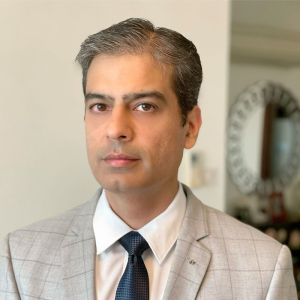
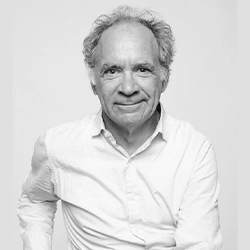
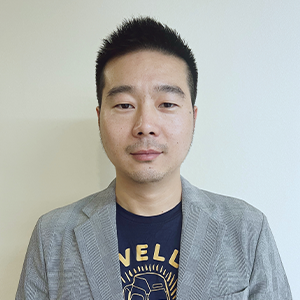
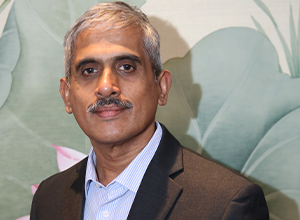
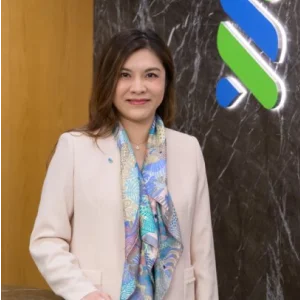
Axel Winter

Axel Winter

AI Operating Model and Enterprise Architecture Leader, Former Global Head, Standard Chartered

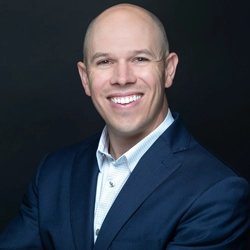
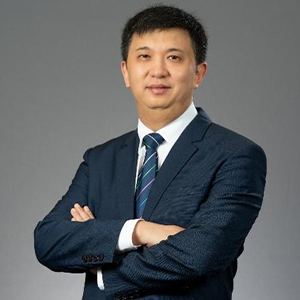
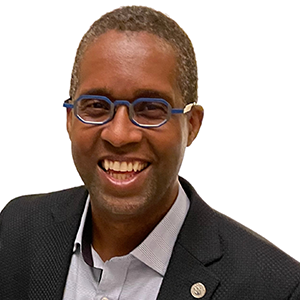
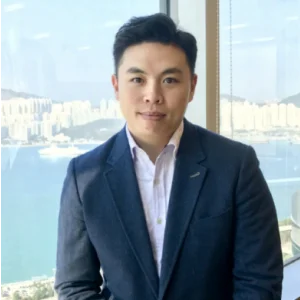
Prof. Dr. Juergen Rahmel

Prof. Dr. Juergen Rahmel

Banking AI Research and Model Risk Leader, Lecturer, University of Hong Kong

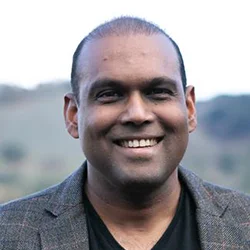
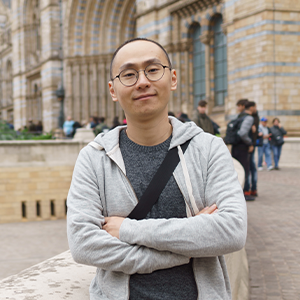
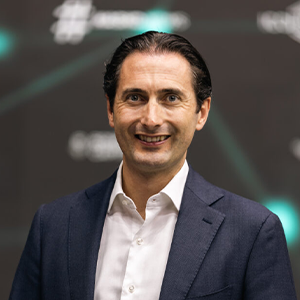
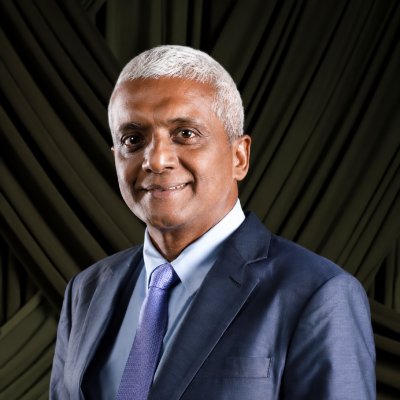
Tavonga Muchuchuti

Tavonga Muchuchuti

AI Policy and Financial Innovation Leader, Board Member, Africa Fintech Network

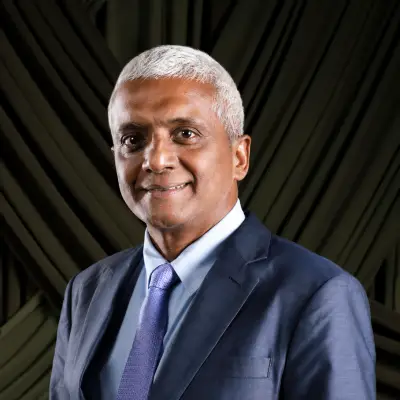
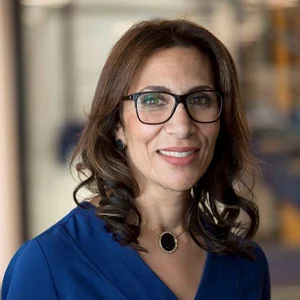
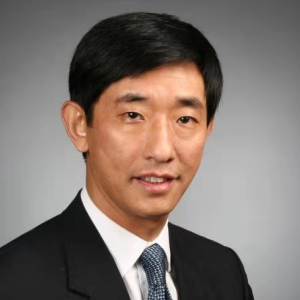
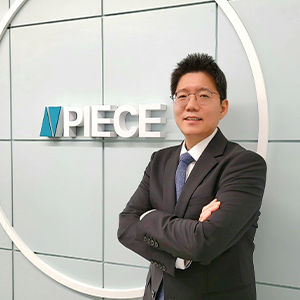
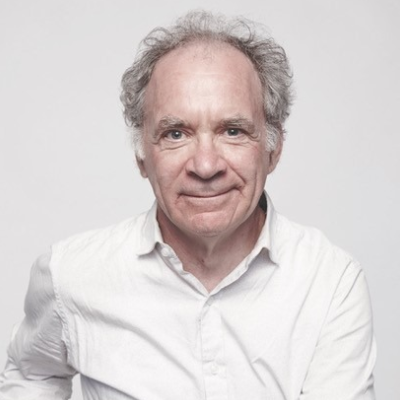
Emmanuel Daniel

Emmanuel Daniel

Founder, TAB Global

The Investment

With Accommodation

US$ 5,800

Early bird: US$ 4,900 till 30 December 2026
  • Full access to Building the AI Bank Bootcamp Asia 2027 (16 - 17 June 2027, Bali, Indonesia).
  • Programme slides, reading materials and videos.
  • 3-night accommodation in Bali, Indonesia (15 - 17 June 2027).
  • All program-related breakfasts and lunches.
  • Certificate of Participation
  • One year membership to Future Bank Working Group

*Excludes airfare, visa fees, airport transfers and dinners

Register Now

Without Accommodation

US$ 5,000

Early bird: US$ 4,200 till 30 December 2026
  • Full access to Building the AI Bank Bootcamp Asia 2027 (16 - 17 June 2027, Bali, Indonesia).
  • Programme slides, reading materials and videos.
  • All program-related breakfasts and lunches.
  • Certificate of Participation
  • One year membership to Future Bank Working Group

*Excludes airfare, visa fees, airport transfers and dinners

Register Now

Haven’t Booked Your Seat Yet?

Get In Touch

For registration enquiries, click here

For Agenda enquiries, click here