25 May 2027
Fairmont Hanoi

About This Masterclass

Most banks no longer need to be persuaded that AI matters. In Asia, Africa, the Middle East and Europe, they are already running models in credit, fraud, service and marketing. The harder questions now sit with the board: which decisions AI may take, who answers when it is wrong, where it pays back, and how the bank stays within regulatory frameworks that are becoming more specific every year.

Hosted in Hanoi, This Masterclass condenses the two-day Building the AI Bank Bootcamp into a single, focused executive briefing. It keeps the bootcamp’s strongest material, including the decisioning architecture, the foundation model cases, the governance and security sessions and the board simulation, and replaces the multi-hour build labs with short live demonstrations, so that executives see what an AI agent actually does, where it fails and how it is controlled.

The day is designed around three convictions:

01
Understanding must be current.

Every briefing draws on developments from the last twelve months, in Asia and worldwide.

02
Strategy must be decided, not heard.

Every session ends with a decision the delegate’s own board will have to take.

03
Seeing is believing.

Three short live demonstrations make agentic AI concrete for leaders who will approve it, fund it and answer for it.

The Landscape Has Changed: What Bankers Must Know Now

The Global Forces

Agents are moving from pilots to teams

Agents are moving from pilots to teams

Leading banks are redesigning work around AI agents, and digital banks in emerging markets, from Cake by VPBank in Vietnam to Nubank in Latin America, are scaling on AI-driven efficiency. The question is no longer whether to deploy AI but how quickly to redesign work, decisions and controls around it.

The customer’s agent is at the door

The customer’s agent is at the door

Banks worldwide are divided on whether third-party AI agents may act inside customer accounts. Some large US banks have refused; card networks and open agent protocols are building rails for agent payments; Vietnam permits AI payments within defined limits, with consent and the right to revoke. Every bank needs a board-approved position.

Fraud and supplier risk have become AI problems

Fraud and supplier risk have become AI problems

Deepfakes, face-spoofing and voice cloning now target the biometric and verbal controls banks introduced to stop fraud, in every market. At the same time, banks depend on a small number of AI model and cloud suppliers whose updates can change how a bank’s AI behaves without any change to its own code. The Financial Stability Board has set out expectations on third-party oversight across the AI supply chain.

Regulation is converging on the same questions

Regulation is converging on the same questions

Supervisors everywhere are asking for documentation, explainability, fairness testing, human oversight and supplier control. What differs is how prescriptive each market has become, and how quickly.

Market Snapshots

Vietnam: hard numbers on what an AI may do

Vietnam: hard numbers on what an AI may do

Vietnam’s Law on Artificial Intelligence took effect on 1 March 2026, with Decree 142/2026 providing guidance. On 30 September 2026, the State Bank of Vietnam issued Circular 53/2026/TT-NHNN, which classes automated credit decisions of VND 50 million or more as high-risk, caps AI-executed payments at VND 100 million a day for individuals and VND 500 million for institutions, gives customers the right to suspend or revoke AI payment authority, and requires that AI does not replace human responsibility.

Indonesia: governance guidance in place, national rules pending

Indonesia: governance guidance in place, national rules pending

OJK has issued its Artificial Intelligence Governance for Indonesian Banking, covering accountability, human oversight, fairness, reliability and IT risk. National Presidential Regulations on an AI roadmap and AI ethics have been awaiting signature through 2026. By October 2026, the Indonesia Anti-Scam Centre had received more than 737,000 scam reports since its launch.

Europe: the high-risk deadline approaches

Europe: the high-risk deadline approaches

Under the EU AI Act, credit scoring is a high-risk use. Obligations for such systems are set to apply from 2 December 2027 under the provisional Digital Omnibus agreement, reaching any bank that serves EU customers.

Africa and the Middle East: principles first, specific rules to follow

Africa and the Middle East: principles first, specific rules to follow

South Africa already restricts decisions based solely on automated profiling, and its regulators are developing a principles-based approach aligned with the Financial Stability Board. Across much of Africa and the Middle East, supervisors are applying existing data protection, model-risk and outsourcing rules to AI while specific frameworks are developed.

The Landscape Has Changed: What Bankers Must Know Now

A binding AI rulebook is now in place

A binding AI rulebook is now in place

Vietnam’s Law on Artificial Intelligence took effect on 1 March 2026, with Decree 142/2026 providing guidance. On 30 September 2026, the State Bank of Vietnam issued Circular 53/2026/TT-NHNN on safety, risk management and deployment conditions for AI in banking. It operationalises the AI Law for the sector and requires that AI systems do not replace human responsibility or decision-making authority.

Vietnam has put numbers on what an AI may do

Vietnam has put numbers on what an AI may do

Under Circular 53, automated credit-granting systems handling facilities of VND 50 million or more are classed as high-risk. AI-executed payments for a customer are capped at VND 100 million a day for individuals and VND 500 million for institutions, within the bank’s own internal limits. Customers must sign an agreement that sets the permitted transactions and limits, can suspend or revoke AI payment authority at any time, and the bank must be able to tell whether a transaction was executed by AI or by a person. Few regulators anywhere have set such specific limits.

Agents are moving from pilots to teams

Agents are moving from pilots to teams

Leading Vietnamese banks have made data and AI the centre of their strategies, and digital banks such as Cake by VPBank are scaling on AI-driven efficiency. The question for the rest of the market is no longer whether to deploy AI but how quickly to redesign work, decisions and controls around it.

The customer’s agent is at the door

The customer’s agent is at the door

Globally, banks are divided on whether third-party AI agents may act inside customer accounts: some large US banks have refused, while card networks and open agent protocols are building rails for agent payments. Circular 53 points Vietnam towards a third path: permit AI payments within defined limits, with consent and the right to revoke. Each bank needs a board-approved position.

Financial institutions

Fraud and supplier risk have become AI problems

Deepfakes, face-spoofing and voice cloning now target exactly the biometric and verbal controls banks introduced to stop fraud. At the same time, banks depend on a small number of AI model and cloud suppliers, whose updates can change how a bank’s AI behaves without any change to the bank’s own code. The Financial Stability Board has set out expectations on third-party oversight across the AI supply chain.

Session Formats

Executive Briefing

A concise intelligence briefing on live deployments and current developments, never longer than 15 minutes before the room is asked to respond

Live Demonstration

Faculty run a working AI agent on screen against a realistic banking scenario, then deliberately push it past its limits. Delegates watch, question and decide; no laptops are needed

Structured Dialogue

Short table exercises applied to each delegate’s own institution, with answers distilled for the room

Room Vote

A motion put to the room, voted on before and after the discussion

Board Decision Card

A one-line decision recorded at the end of each session: Decide, Defer or Reject, with a named owner. The cards become the delegate’s board memo

Board Simulation

Delegates take board seats with confidential briefs and approve, amend or reject a five-year AI strategy for a bank, then respond to a shock

The Programme

TUESDAY, 25 May 2027

  • 08:00 – 08:30

    Registration and coffee

  • 08:30 – 08:45

    Opening Remarks — Why Every Bank Must Now Decide What AI May Decide

    OPENING

    The author of Building the AI Bank sets the frame for the day: digital banking accelerated human rules through software; AI delegates judgement itself.

    • From digital to delegation: what changes when the bank becomes a machine-supported institution that employs people (Building the AI Bank, Chapters 1 and 2)
    • Why 2027 is the execution year for banks in Asia and beyond, and the questions this room should leave able to answer

    Delivered by Emmanuel Daniel

  • 08:45 – 09:15

    Opening Session — The State of AI in Banking: A Global View from Hanoi

    BIG PICTURE

    A rapid briefing on what AI can do in banking today, grounded in live deployments rather than vendor promises, and set against the room’s own starting point.

    • The room’s baseline: results of the pre-Masterclass AI Maturity and Board Readiness Index, shown live and benchmarked across the institutions present
    • The agentic turn: AI that understands, reasons, decides and acts. Which of the four does your bank allow today?
    • Three forces reshaping the next 24 months: foundation models trained on banking data, customers’ own AI agents, and programmable money
    • What changed in 2026: Vietnam’s AI Law and Circular 53, Indonesia’s banking AI governance, the EU AI Act timetable, and what they mean for the board’s agenda

    Board Decision Card: the one AI decision your board has been postponing

    Facilitated by Axel Winter

  • 09:15 – 10:00

    Session 1 — AI Strategy for the Board: Building the AI Operating Model

    STRATEGY

    AI is not a project line item. This session reframes AI strategy as a set of decisions about who decides, what is measured and where the bank invests.

    • Who owns the decisions? Moving from “who signs” to “under what conditions does the system decide”
    • A new board metric: how many material decisions are now machine-supported, and how each is governed
    • Invest in decision surfaces, not scale: where AI changes economics in a market where credit growth is managed by quota
    • AI spend as a statement of intent: build, buy or partner, and what each signals to staff, supervisors and investors
    • What boards are really asking, and the questions they should be asking instead (Building the AI Bank, Chapters 3 and 12)

    Room vote: “Our board has a clear, written position on what AI may decide without a human.” Vote before and after

    Facilitated by Axel Winter

  • 10:00 – 10:15

    Coffee break

  • 10:15 – 11:00

    Session 2 — Where AI Pays: Banking Applications That Scale

    APPLICATIONS + DEMO

    From long lists of use cases to a short portfolio that pays back. The session surveys the applications with proven value and the discipline needed to choose between them.

    • The applications that pay: SME and consumer credit, fraud and scam detection, collections, KYC and onboarding, customer service, compliance and treasury
    • Pruning the portfolio: why banks are cutting AI use-case lists to the lighthouse areas that have data, an owner and a measurable return
    • Foundation models in banking, briefly: Revolut’s PRAGMA and Nubank’s nuFormer, and why banks should earn the backbone one valuable decision at a time
    • The data estate as the real constraint: what any bank needs in place before advanced AI is possible

    Live Demonstration 1:an AI agent reviews an SME credit file, extracts the financials, drafts a credit memo and recommends a decision. Faculty then change one fact and show where the agent should stop and hand over to a credit officer

    Board Decision Card: the one use case your bank should scale in the next 12 months, and its owner

    Facilitated by Prof. Dr. Juergen Rahmel

  • 11:00 – 12:00

    Session 3 — Who Decides, Who Supervises, Who Can Stop It: Decisioning Under the New Rules

    GOVERNANCE + DEMO

    A digital bank adds AI to review applications faster. An AI bank designs credit, fraud and payments assuming machines act first and humans supervise. Regulators, led by Vietnam’s Circular 53, are now making that design a requirement.

    • The functional AI stack of a bank: Data, Inference, Control and Execution. The control layer decides when AI must ask for help and when it must stop
    • Five patterns for placing the human: human-led with AI as challenger; AI-supported; active approval; AI with exceptions; AI with oversight
    • Circular 53 in practice, as the most specific rulebook in the region: high-risk thresholds, daily AI payment caps, customer agreements, revocation and the ability to distinguish AI from human transactions
    • How the same decision is treated elsewhere: OJK’s human-in-the-loop expectations, the EU AI Act’s high-risk obligations and South Africa’s rule on solely automated decisions
    • Three tests for every human sign-off: has the reviewer ever rejected it (above 95% approval, the checkpoint is theatre); what does an error cost; does the review teach the system anything?

    Live Demonstration 2:a payments agent operating under Circular 53-style limits: it checks the customer’s consent and limits, executes within the cap, refuses a transaction that breaches it, escalates to a named person and writes the audit trail

    Table exercise (15 minutes): place six decisions from a sample credit-and-payments agent into high, medium or low risk, and set who supervises and who can stop each one

    Board Decision Card: : the first material decision in your bank that should move to “AI with exceptions”, and who signs the mandate

    Facilitated by Axel Winter and Prof. Dr. Juergen Rahmel

  • 12:00 – 13:00

    Lunch — facilitated peer tables: “The AI decision my board will find hardest this year”

  • 13:00 – 13:45

    Session 4 — Agents at the Door and Money in Motion: Payments, Commerce and the Balance Sheet

    STRATEGY

    When customers hand their finances to AI agents, the bank’s interface, its payments franchise and eventually its balance sheet all change.

    • Customers are building agents too: what happens to loyalty, pricing and deposits when an agent shops for the customer (Building the AI Bank, Chapter 8)
    • Block, limit or welcome: the three positions banks are taking on third-party agents, and why Vietnam’s Circular 53 points towards “limit”
    • Who carries the loss when an agent acting for a customer makes a mistake?
    • Payments as AI in motion: real-time rails, agent payment protocols and tokenised deposits (Chapter 5)
    • The balance sheet comes to life: real-time treasury and programmable liabilities (Chapter 4)

    Room vote: “Within three years, a material share of our customers’ payments will be initiated by AI agents.” Vote before and after

    Board Decision Card: your bank’s position on customers’ AI agents: block, limit or welcome

    Facilitated by Axel Winter

  • 13:45 – 14:30

    Session 5 — Trust by Design: Risk, Ethics, Security and Suppliers

    RISK + DEMO

    Good governance does not mean nothing goes wrong. It means the bank knows when it has, who answers, how the decision is reversed and what it learns.

    • Ethics is in the plumbing: bias enters through data, labels, objectives and feedback loops before anyone reviews the model (Chapter 11)
    • Fraud that beats the controls: deepfakes, face-spoofing and voice cloning against biometric and verbal checks
    • Protocol risk is operational risk: prompt injection and tool poisoning in agent frameworks (Chapter 10)
    • The supplier question: dependence on a few model and cloud providers, audit access and tested exit plans
    • One decision, many regimes: how Vietnam, Indonesia, the EU, South Africa and the other markets in the room would each treat the same AI decision

    Live Demonstration 3: a red-team test: faculty attempt to manipulate a banking agent with a hidden instruction planted in a customer document, then show the guardrail and logging that stop it

    Board Decision Card: one “plumbing fix” and one supplier exit question your board should ask for

    Facilitated by Prof. Dr. Juergen Rahmel

  • 14:30 – 14:45

    Afternoon break

  • 14:45 – 15:30

    Session 6 — Making It Stick: Ownership, People and Why Pilots Stall

    DIALOGUE

    Most AI pilots do not fail on technology. They fail on incentives, ownership and the people expected to use them.

    • “Your AI agent declined 400 SME loans overnight. Which executive answers for it?” Central AI lab, embedded squads or a hybrid centre of excellence
    • One owner answers for the outcome; others answer for their part. What a Chief AI Officer, an AI Product Manager and an AI Risk Officer actually decide
    • Four barriers to scale: incentives, governance that says “no” by default, no owner after the pilot, frontline resistance
    • Delegate the task, not the accountability: the hybrid workforce and the junior-banker problem (who becomes your senior credit officer in 2035?)
    • Reskilling: broad AI literacy for all versus deep skills for a few

    Exercise: bring-your-own-pilot. One delegate per table describes a live AI pilot in two minutes; the table names the three most likely reasons it dies before production

    Facilitated by Prof. Dr. Juergen Rahmel

  • 15:30 – 16:30

    Board Simulation — Approving a Five-Year AI Strategy

    BOARD SIMULATION

    Delegates sit as the boards of two competing banks in the same fictional fast-growing market: a large state-owned bank and an ambitious private bank. Each receives the same management paper asking it to approve a five-year AI strategy that must meet hard regulatory limits modelled on Circular 53.

    • Each delegate takes a seat with a public position and a confidential brief: Chair, CEO, CFO, Chief Risk Officer and independent directors for technology, audit and people
    • Round 1 (30 minutes), the decision: build, buy or partner; who owns AI and which committee oversees it; the limits AI may act within; the policy on customers’ agents; and what would make the board stop
    • Round 2 (20 minutes), the shock: the main AI supplier raises prices by 40%, or a competitor launches an agent that moves customers’ deposits automatically. The board must amend its resolution
    • Faculty intervene in role as the regulator, the investor, the supplier and the customer

    Output: one signed board resolution per bank, before and after the shock

    Facilitated by Axel Winter and Prof. Dr. Juergen Rahmel, in role

  • 16:30 – 17:00

    Closing — What Do We Tell Our Board?

    CLOSE

    • The Board Wall read-out: the day’s decision cards grouped into a one-page memo for each delegate’s board
    • Each delegate commits to one action in the next 90 days, and the date it goes to their board
    • Into the Summit: the questions to take into The Asian Banker Future of Finance Summit over the next two days

    Facilitated by Emmanuel Daniel, Axel Winter and Prof. Dr. Juergen Rahmel

  • 17:00

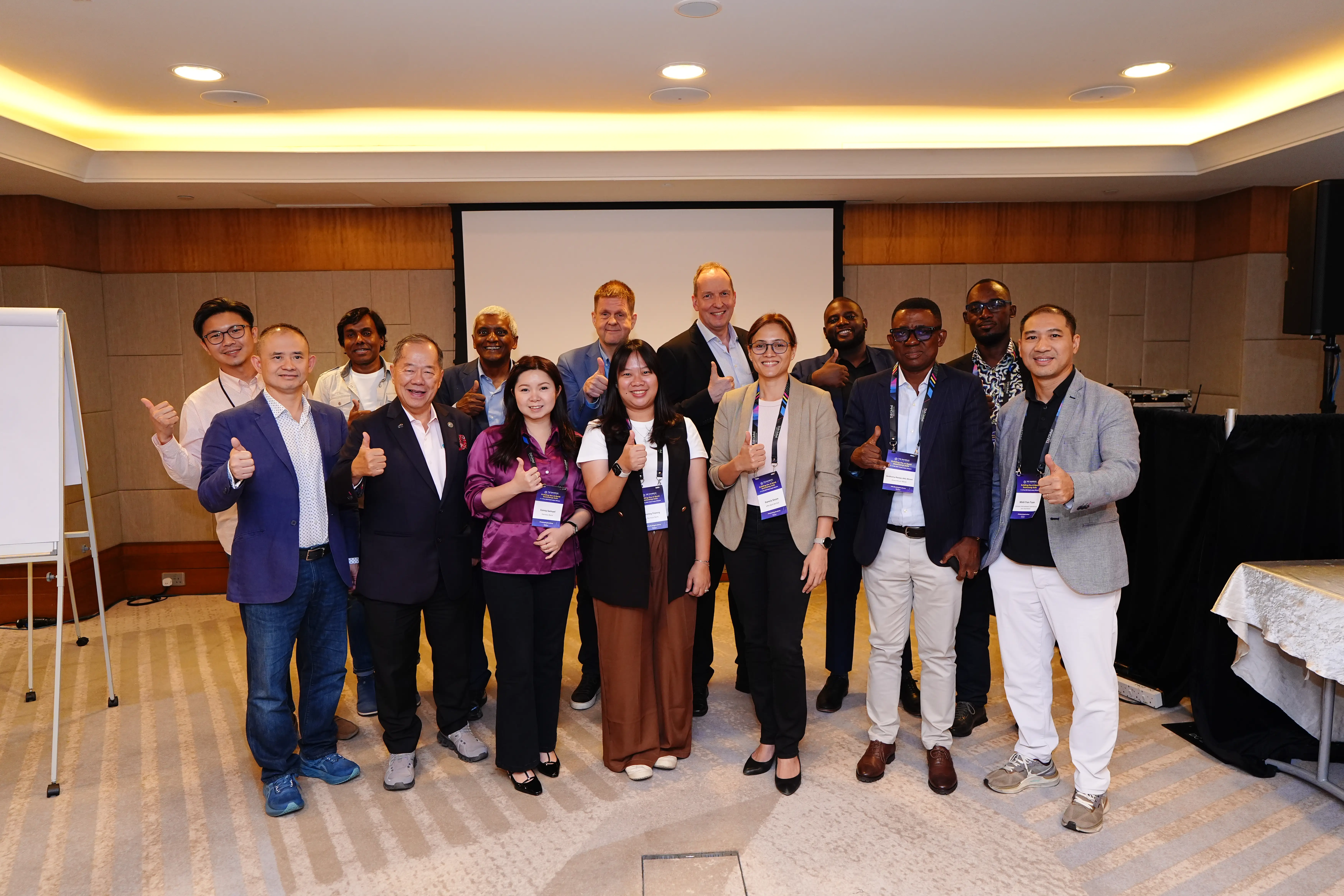
    Close of Masterclass — certificate presentation and group photograph

Before You Arrive

Onboarding questionnaire

your bank’s AI position, the AI decisions open at board level, one live AI pilot, and your top regulatory concern about AI. Your answers form the room’s baseline in the Opening Session.

Pre-reading

: selected chapters of Building the AI Bank: Speed, Judgment and Power by Emmanuel Daniel, summaries of the PRAGMA and nuFormer cases, and a one-page comparative guide to AI banking rules in Vietnam, Indonesia, the EU and other delegates’ markets.

Bring:

the live AI pilot you named in the questionnaire. No laptop is required.

What you get before and after the bootcamp

  • ✓
    Pre-programme briefing

    Understand the programme objectives and what to expect.

  • ✓
    Preparation materials

    Access essential reading materials and preparation guides.

  • ✓
    Initial assessment

    Identify your bank's priorities and key challenges.

  • ✓
    Participant networking

    Connect with fellow delegates before the bootcamp.

  • ✓
    Proceedings Report within 48 hours

    Summarising key insights, areas of consensus and the AI Bank concepts from the Capstone.

  • ✓
    Presentation materials and lab guides

    Including agent design frameworks, foundational model assessment templates and Capstone project materials.

  • ✓
    Your AI Bank concept document

    Each participant's concept document and agent design documentation, formatted for internal handover.

  • ✓
    Delegate directory and LinkedIn group

    For ongoing peer exchange.

  • ✓
    Future Bank Working Group 1 year

    One-year membership with quarterly briefings, webinars and research.

  • ✓
    Optional follow-up strategy session within 60 days

    A 60-minute session with a Banking Academy associate.

Post-Masterclass Deliverables

Your one-page Board AI Decision Memo, built from the decision cards completed during the day and formatted for your own board, within 48 hours

The Circular 53 decisioning worksheet, mapping decisions to risk tiers, supervisors and stop-powers

The board resolutions from the simulation, before and after the shock, and your personal 90-day action plan

All presentation materials and the board simulation briefs

Delegate contact directory and a private LinkedIn group for ongoing peer exchange

Priority access to the full two-day Building the AI Bank Bootcamp in Bali, 16–17 June 2027, where tables build and test a working AI agent

Faculty

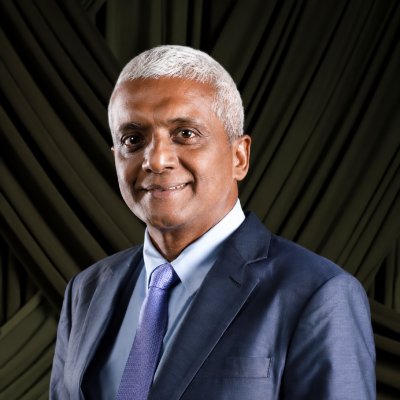
Axel Winter

Axel Winter

AI Operating Model and Enterprise Architecture Leader, Former Global Head, Standard Chartered

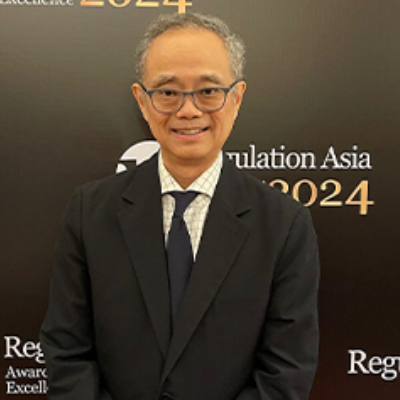
Prof. Dr. Juergen Rahmel

Prof. Dr. Juergen Rahmel

Banking AI Research and Model Risk Leader, Lecturer, University of Hong Kong

Emmanuel Daniel

Emmanuel Daniel

Founder, TAB Global

The Investment

1-Day Masterclass + 2-Day Summit Pass

US$ 3,000

Early bird: US$ 2,500 till 29 January 2027
  • Full access to Building the AI Bank Masterclass & The Asian Banker Future of Finance Summit (26–27 May 2027).
  • Programme slides, reading materials and videos.
  • Programme-related breakfast and lunch.
  • Certificate of Participation.
  • One year membership to Future Bank Working Group.

*Excludes airfare, visa fees, airport transfers and dinners.

Register Now

Haven’t Booked Your Seat Yet?

Get In Touch

For registration enquiries, click here

For Agenda enquiries, click here